Carl Jung on the Different Approaches of East and West

Carl Jung's interest in Taoism was not simply intellectual curiosity. He saw Taoism as a profound expression of psychological wisdom that could complement the strengths and limitations of Western culture.

Several Taoist ideas resonated deeply with him. First, the yin-yang principle reflected his belief that psychological health comes from integrating opposites rather than identifying with one side. Second, the Taoist concept of wu wei (effortless action) paralleled his view that we should work with, rather than dominate, the unconscious.

Carl Jung's Contrast Between Eastern and Western Approaches

Western Mentality

  • Outward-directed

  • Analytical

  • Focused on external reality

  • Technologically and scientifically oriented

Eastern Mentality

  • Inward-directed

  • Contemplative/ inner cultivation

  • Focused on direct experience of consciousness itself


Jung believed that some modern Westerners have become psychologically unbalanced because of rationality while neglecting the inner life. He also cautioned that some Westerners approach Eastern spirituality as an escape from unresolved personal conflicts rather than as a path of genuine transformation. An integrated approach, in Jung's view, combines the strengths of both traditions: Western psychology helps individuals become mature, independent adults, while Eastern spiritual practices help them experience a larger wholeness beyond the ego. Together, they support both psychological maturity and spiritual realization.

What Is the Difference Between Lineage-Based Transmission Qigong and Exercise-Style Qigong?

Today the word “Qigong” is used to describe many different practices. Some people encounter Qigong as a gentle wellness exercise in a park or yoga studio, while others enter a traditional system of internal cultivation passed down through generations of teachers.

Taoist Light Qigong, lineage-based Qigong style and exercise-style Qigong are fundamentally different in purpose, structure, and transmission.

Understanding this distinction helps students choose the correct path for their goals and expectations.

Lineage-Based Transmission Qigong

Traditional lineage-based Qigong is not simply a collection of exercises. It is a structured internal training system transmitted directly from teacher to student within a living lineage.

In authentic lineage systems, training is sequential and permission-based. Students are guided step-by-step through foundations, internal development, and more advanced methods only when properly prepared.

The methods are transmitted directly through teacher-to-student instruction rather than learned casually from random classes, videos, or books. Because of this, the relationship between teacher and student is considered an essential part of the practice itself.

Practice also requires commitment, ethics, and preparation. Traditional systems often emphasize discipline, character development, consistency, and responsibility alongside energetic training.

Students are initiated into a living lineage, meaning they become part of a continuing tradition that has been preserved and transmitted through generations. The teachings are not viewed as interchangeable “techniques,” but as parts of an integrated cultivation system.

Progression depends on correct guidance and energetic development. Students do not simply collect methods or memorize movements. Each stage builds upon the previous one, and advancement depends on proper internal change and understanding.

For this reason, lineage-based Qigong is usually not offered as a casual drop-in activity.

Exercise-Style Qigong

These classes are often fitness-oriented and open-format, allowing people to attend casually without long-term commitment or formal progression.

In many cases, the training consists of a collection of techniques gathered from different systems and adapted for accessibility.

Exercise-style Qigong is commonly:

  • exercise-oriented

  • open-format

  • mixed technique-based

  • non-lineage

  • designed for casual attendance

  • can be mixed with other exercise- style of Qigong

Why the Difference Matters

Confusion arises when all forms of Qigong are presented as if they are the same.

A person looking for a casual wellness class may not be seeking the commitment required in traditional training. Likewise, a sincere student searching for authentic internal cultivation may become frustrated when encountering only exercise programs without transmission and deeper guidance.

Traditional lineage systems preserve methods carefully because they were designed as complete paths of development rather than isolated techniques.

For sincere students, lineage-based Qigong offers:

  • direct guidance

  • structured progression

  • energetic transmission

  • deeper internal cultivation

  • preservation of traditional teachings

  • can not be mixed with other lineage-based Qigong or other forms of energetic system

These powerful systems require dedication, but they also provide a coherent path of long-term development/transformation grounded in authentic transmission.

Not all Qigong is the same. Are you searching a path of internal cultivation requiring formal training, transmission, and committed practice? If you are looking for an authentic and effective self-healing practice as well as pursuit for deeper spiritual evolvement. Taoist Light Qigong is the way.
Song (松) in Taoist Light Qigong

“Song” (松) is the key step from intermediate to advanced Qigong practice. This transition is not about doing more, pushing harder, or learning complicated techniques. Instead, it is about deepening your internal awareness, refinement, and integration. At this level, progress comes from subtlety rather than effort.

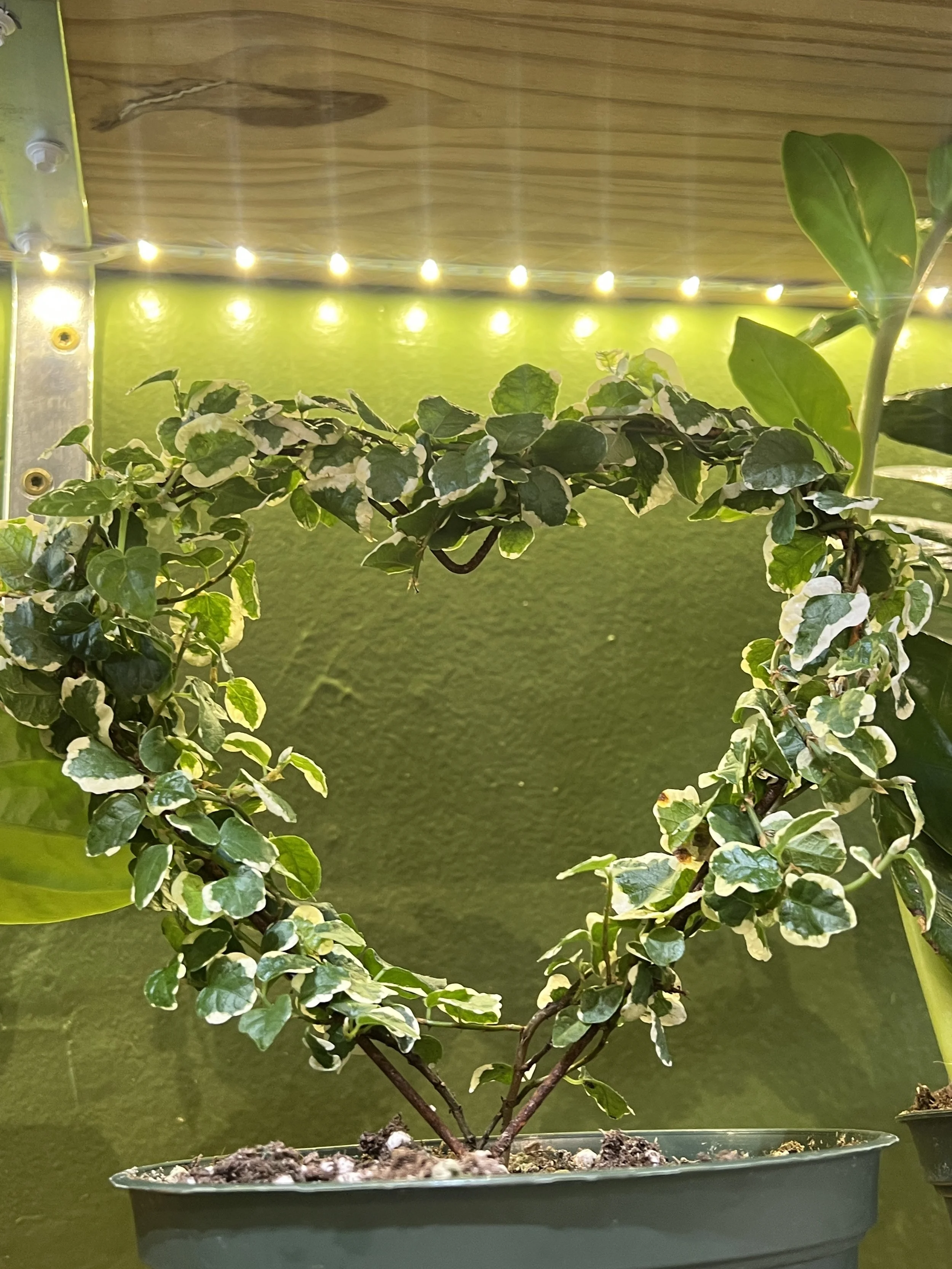
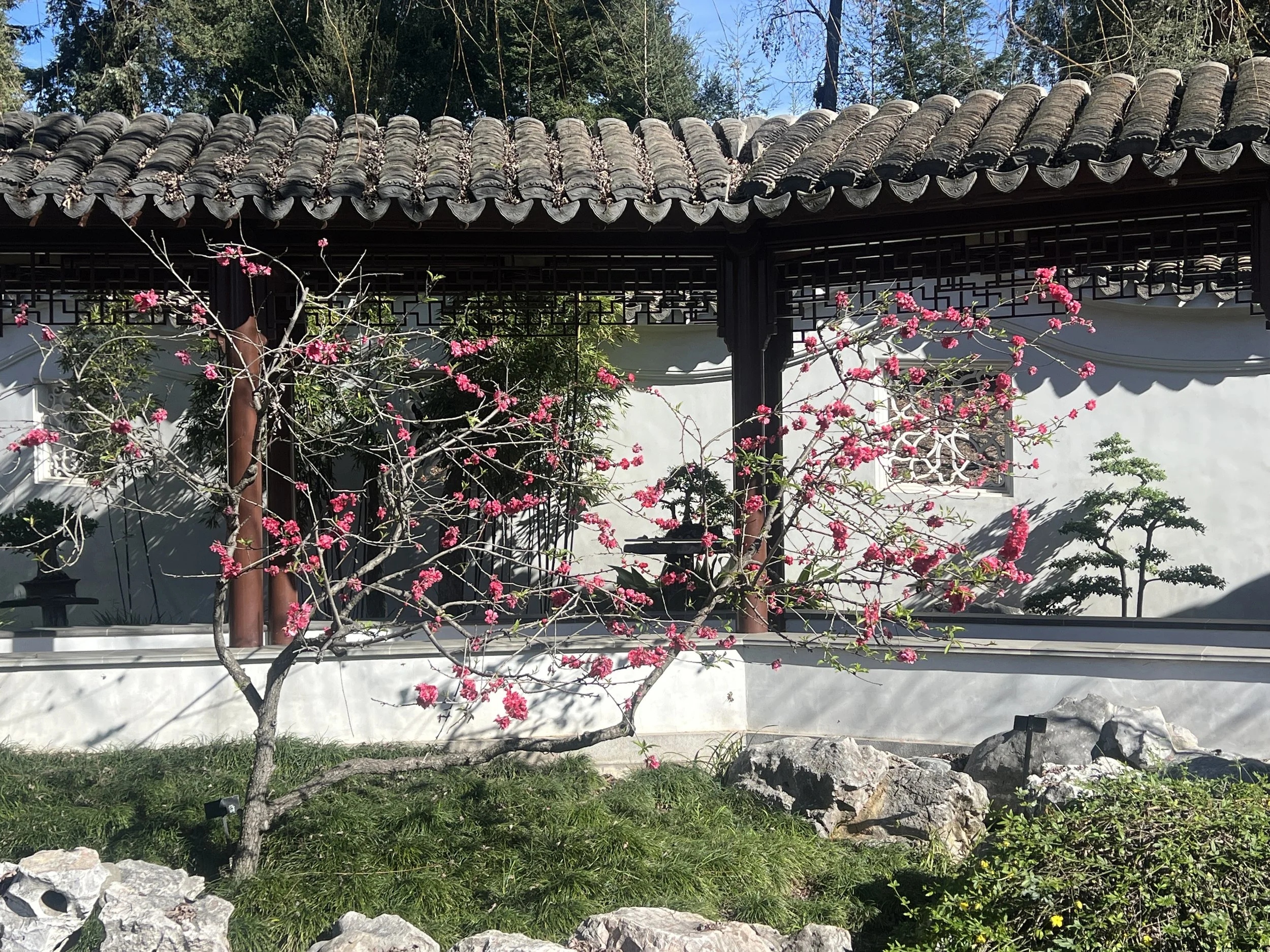
Song is a state of deep, natural release combined with inner support and awareness. It is not simply “relaxing,” but a calm, awake looseness. It means letting go of unnecessary tension in the body, energy, and mind without collapsing or losing structure. You can imagine a tightly clenched fist gently opening, or a tree that is deeply rooted while its branches move freely with the wind—stable at the core, yet soft and adaptable on the outside.

Song develops in three layers. On the physical level, the body releases excess tension, joints open naturally, and you feel light yet grounded—neither stiff nor limp, but elastic and connected. On the energetic level, blockages begin to dissolve, Qi flows more smoothly, and the breath becomes deeper and more natural. Instead of forcing Qi, Song allows it to move by itself. On the mental level, the mind becomes quiet but clear, with less grasping and control, and awareness feels open and spacious.

As Song develops, you may notice a sense of expansion inside the body, gentle warmth or subtle flow, and a feeling of being lighter yet more stable. Movements become smoother, more effortless, and naturally connected.

It is important to understand what Song is not. It is not collapsing or slouching, not becoming limp or weak, not zoning out, and not trying hard to relax. True Song maintains structure, clarity, and vitality.

In Taoist Light Qigong, Song is essential because it opens the energy pathways, releases stagnant or unhealthy Qi, and allows the body, breath, and mind to integrate. Without Song, Qi cannot flow freely. With Song, transformation happens naturally.

A simple way to approach Song is to stop trying to relax and instead gently notice where you are holding tension. Allow those areas to soften while keeping your center upright and alive. Let movement arise naturally without forcing. Over time, Song is no longer something you practice—it becomes a natural state you carry into all aspects of life.

Tao Te Ching -49

The master is not fixed in his mind,
He is open to others' minds:


He treats the kind with kindness,
He treats the unkind with kindness;
Thus kindness is attained.

He trusts the trustworthy,
He trusts the untrustworthy;

Thus trust is attained.


The master lives in the world quietly and humbly,
Blending his heart with that of all people.

The people watch and listen to him;
The master cares for them as children.

Translated by Chiyan Wang; edited by R. Smitheram and N. Wang

This chapter is about how we relate to others in the world.

The master trusts beyond fear, embracing both the trustworthy and the untrustworthy — not because he is naive, but because suspicion does not control his heart.

He moves through the world quietly, caring for others like children, with patience, softness, and without domination.

True wisdom is having no rigid self, responding to everyone with steady kindness and trust.

It is a teaching of compassion without judgment and influence without force.

Tao Te Ching – 48

In pursuit of knowledge,

everyday something is gained,

In practice of the Tao,

everyday something is dropped.


less and less to force things,

until you reach non-doing.


When nothing is done,

nothing is left undone.

Government shall not bother people,

if government constantly bother people,

this one should not be in charge.


This chapter teaches that learning adds, but the Tao subtracts.

By continually reducing desire and over-doing, one arrives at non-doing (wu wei), state. From this state, things unfold naturally, and nothing essential is left undone.

The world is best guided through simplicity and non-interference; once governments impose themselves too much, they lose the ability to govern well.

In essence, Chapter 48 reveals that true effectiveness comes from restraint, trust in natural order, and knowing when not to act.

Tao Te Ching -47

True wisdom doesn’t come from going far, doing more, or collecting more information.
It comes from stillness and inner awareness.

When you are centered and aligned, you naturally understand life and act wisely—
without forcing, chasing, or struggling.

You can know the world

without leaving your door.

You can understand the Tao

without looking out the window.

The farther you go,

the less you know.

Thus the Master

knows without going,

understands without seeing,

and accomplishes

without doing.


Translated by Chiyan Wang; edited by Robert Smitheram


Tao Te Ching -46

When the world follows the Tao,

Horses plow the fields.

When the world turns away from the Tao,

Horses are prepared for war.

No disaster is greater than discontent.

No mistake is greater than greed.

Therefore, true contentment brings true fulfillment.


Translated by Chiyan Wang

Edited by R. Smitheram; N. Wang


The world reflects the state of our own perception. When we wake in the morning and smile at the mirror with contentment, the world smiles back. When we face the mirror with discontent, the world reflects that same discontent. Greed narrows our vision, allowing us to see only one thing while missing what is essential and the wholeness of life.

In Chapter 46 of the Tao Te Ching, Lao Tzu offers an important teaching for true cultivators: by transforming our inner state and returning to contentment, we restore ease and peace within ourselves.

The Qigong Path to an Illness-Free End of Life

People often hope for a good life, but have you considered a good death?
A good life does not always lead to a good death — but a good death always reflects a life well-lived* (beyond worldly perspectives). Most people do not fear death itself, but the suffering that can come before it: illnesses, decline, pain, and loss of clarity and dignity.

Is it possible to leave this world without sickness? Can we reach that state?
In thousands of years of Qigong tradition, masters could choose the time and manner of their passing. They would inform their disciples or families in advance and leave peacefully, sitting quietly, with a clear and lucid mind, free of illness — simply at an older age. This is considered a good death.

Years of steady, correct practice naturally lead to such an ending. Most people begin Qigong in response to illness, discomfort, or emotional challenges. These struggles often become turning points, prompting the search for healthier ways and proper practice.

For diligent practitioners who cultivate daily, balance emotions and mind, and nurture clarity and inner peace, the body strengthens, illnesses fade, and good health can be maintained until the natural end of life. Deep cultivation can even bring awareness of life’s completion, allowing one to release attachments and return peacefully to the Tao — with trust, simplicity, and inner light.

Why continue practice once illness has disappeared?
Because Qigong is not only for healing. It is for living healthily, aging gracefully, and leaving peacefully and consciously.


*A life well-lived (beyond worldly perspectives) refers to an inner, spiritual quality of life, not measured by wealth, status, fame or external success. From this perspective, a good life includes:

  • Peace of mind: Calm and undisturbed by the outside world.

  • Self-awareness: Living authentically with clarity of values and emotions.

  • Compassion and wisdom: Acting with goodwill toward oneself and others.

  • Connection: Feeling unity with nature , others, the universe and Tao.

  • Health and balance: Body and mind in harmony, free from stress or illness.


In short, it is a lifestyle of self-fulfillment and inner richness, rather than one seeking external approval or recognition.